
Airport Empire - Idle Tycoon
HYPERCELLSimulation
4.5463.00 Reviews
- Version
- 1.7.0
- Installs
- 1.00M
- Age Rating
- Everyone
Screenshots
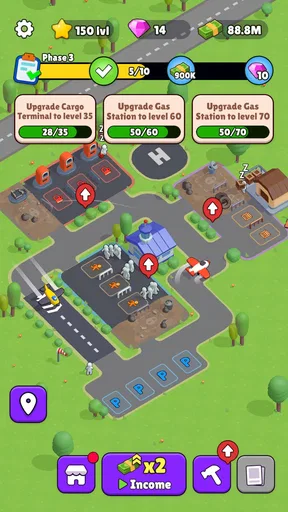
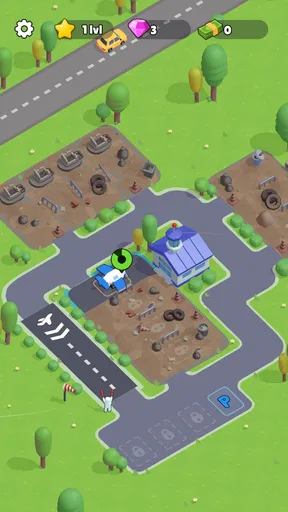
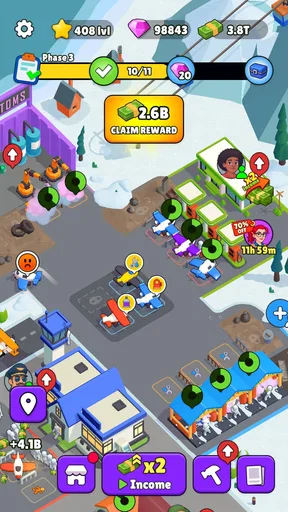
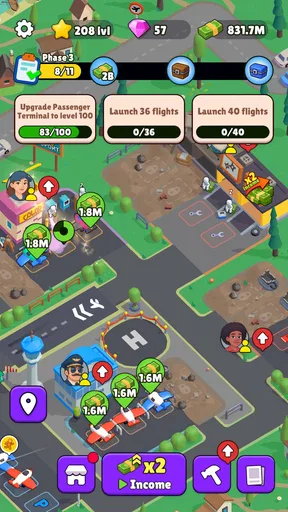
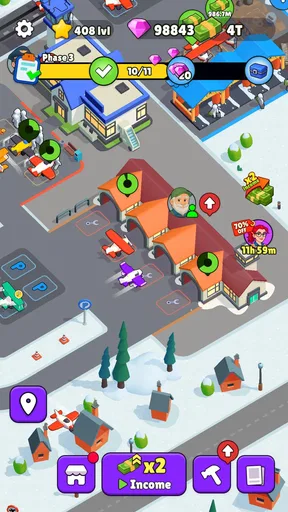
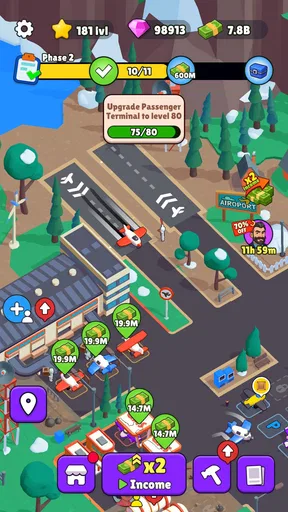
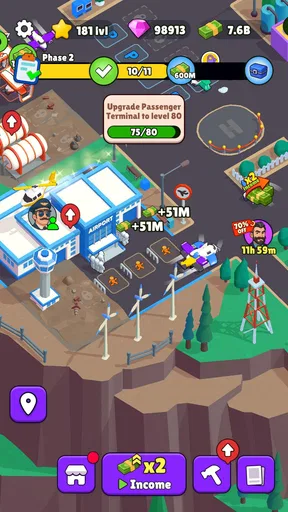
Our Review of Airport Empire - Idle Tycoon
 Analysis by Appyee
I started Airport Empire - Idle Tycoon expecting a simple waiting game, but its appeal became clearer after a few short sessions. The basic idea is to grow an airport business while the game continues producing progress in the background. I make an upgrade, watch the operation become more productive, collect the result, and then decide which improvement deserves the next investment. That sequence is easy to understand, yet it creates enough small decisions to make checking back feel worthwhile.
This is a simulation game from HYPERCELL, available free on Android, with a Teen content rating. It has reached over a million installs and holds a 4.4 average from around twenty-one thousand ratings, which fits my impression that it is aimed at a broad audience rather than only dedicated management-game fans. The current version is 1.2.0, and it runs on Android 7.0 or later.
How the airport loop feels in everyday play
I find the airport loop easiest to enjoy when I treat each visit as a quick check-in rather than a task that needs constant attention. A short pause to notice what changed can make the next upgrade feel more deliberate, especially when I’m fitting play around an ordinary day. That practical rhythm also makes it easier to spot when the experience is being interrupted by something outside the game.
The first action is deliberately simple
The opening minutes are about turning an underdeveloped airport into something that can support more activity. I do not need to learn a complicated control scheme before making progress. The useful starting habit is to look at what is currently limiting growth, improve that part, and then wait long enough to see whether the change actually helps.
That sounds obvious, but it matters in an idle tycoon game. A good first action should produce a visible consequence. Here, the satisfaction comes from connecting a decision with a better-running airport: an investment is made, the business continues operating, and the next available improvement becomes easier to judge. I found this more enjoyable than tapping randomly through upgrades just because a button was available.
The airport theme also gives the loop a clearer identity than a generic cash-collector. Terminals, airlines, and business growth make the progression feel connected to a place. I am not simply increasing an abstract number; I am trying to make an airport more capable and more profitable. That context gives each improvement a little more meaning, even when the underlying interaction remains deliberately accessible.
My advice is to resist spending immediately on every visible option. First, notice which part of the airport is holding back the rest. If one improvement increases the usefulness of several later actions, it is usually more satisfying than buying a small upgrade that only creates a brief bump. The game does not need a spreadsheet to be enjoyable, but paying attention to the order of investments makes the early loop feel less wasteful.
Feedback arrives in small, readable steps
The strongest part of the experience is the feedback rhythm. I perform an action, the airport keeps working, and the next return gives me something to evaluate. That rhythm is why the game works well in short visits. I can open it while taking a break, make a decision, collect progress, and leave without needing a long uninterrupted play session.
Idle games can become dull when the waiting period feels disconnected from the player’s choices. My experience here was better when I treated each return as a review of the airport’s current bottleneck. Instead of asking only, “What can I afford?”, I asked, “What will make the next cycle more useful?” That small change in mindset turns passive income into a sequence of management decisions.
The feedback is particularly comfortable for players who like gradual progress rather than constant pressure. There is no need to react to every moment. I can make a sensible improvement and come back later. The trade-off is that the game’s excitement depends on how much satisfaction I get from incremental growth. If I need frequent surprises, fast action, or a strong narrative push, the quiet pace may feel thin.
A realistic use case is a commute or lunch break. I might check the airport before starting work, choose an upgrade that supports the next stage, close the game, and return later to see whether the investment changed the pace. That is where the idle format makes sense: it gives me a reason to revisit without demanding that I remain focused on the screen.
Rewards are more useful when I plan around them
The reward is not only the amount collected. It is the feeling that the airport has moved from one manageable stage to another. After a successful cycle, I have more room to improve the operation, and that creates the next question: should I strengthen what already works or prepare for a larger expansion?
I enjoyed this more when I separated immediate rewards from long-term rewards. An upgrade that helps the next collection can feel good right away, while a more expensive improvement may make several future visits better. Choosing between those two goals is where the tycoon element becomes tangible. The game remains simple, but the decision is not completely automatic.
One useful approach is to keep a small mental record of what changed after each investment. If an upgrade appears attractive but the next cycle feels almost identical, I know not to repeat that choice blindly. Conversely, if the airport’s progress becomes noticeably smoother, that is a sign that the investment is supporting the wider loop. This kind of observation is more valuable than chasing every short-term reward.
The free-to-play structure also affects how I view rewards. In-app purchases range from $1.99 to $49.99 per item, so players should decide early whether they want a relaxed, no-spend experience or are comfortable paying to accelerate progress. I prefer treating purchases as optional rather than necessary. The game is best for me when the reward comes from choosing well, not from feeling pushed to buy the next step.
That is also where the game may not suit everyone. Players who dislike idle progression, recurring upgrade decisions, or optional spending prompts will probably be happier with a premium simulation that offers a fixed purchase and a more traditional campaign. Airport Empire is a better fit for someone who enjoys checking a growing project repeatedly and accepting that progress is intentionally paced.
The reset is what gives another session a purpose
Every idle session eventually reaches a natural stopping point. I collect what has accumulated, make the most useful improvement I can afford, and close the game once the next decision is clear. That is the reset in practical terms: the airport’s current cycle is complete, my resources have been converted into a new position, and the next visit begins with a changed set of priorities.
I like this structure because it avoids the feeling that I have simply abandoned an unfinished task. The airport continues to develop, but I am not required to supervise it constantly. When I return, I have a fresh decision to make based on the result of the previous one. The reason to begin another session is not merely that a timer ended; it is that my last choice created a new opportunity.
Still, the reset can feel repetitive if I stop making deliberate choices. Once the routine becomes “collect, tap the cheapest upgrade, leave,” the management layer loses much of its appeal. The best way to avoid that is to set a small objective for each visit: improve the current bottleneck, save for a more meaningful change, or test whether a recent investment improved the airport’s rhythm.
This makes the game surprisingly suitable for people who want a low-pressure routine. I can play for a few minutes without losing the thread, and I do not need to remember a complicated chain of events. On the other hand, anyone looking for a simulation with deep staffing, scheduling, logistics, or detailed financial planning should keep expectations modest. The focus is the accessible idle loop, not a full professional airport-management model.
What separates it from other simulation choices
Compared with a conventional city builder, this game asks for less continuous attention. A city builder usually rewards long planning sessions, visual layout decisions, and careful balancing across many systems. Airport Empire feels more compact: the airport is the setting, but the main pleasure comes from improving its earning cycle and returning to see the outcome.
Compared with a fast management game, it is also calmer. I am not constantly reacting to emergencies or trying to complete several tasks at once. That makes it easier to fit into a busy day, although it also means the game may not provide enough tension for players who want urgent decisions. Its strength is consistency rather than drama.
The airport theme gives it an advantage over idle games with less distinctive settings. Expanding terminals and managing airlines are ideas that naturally suggest progression. I can understand why a larger airport should create a stronger business, so the growth has a believable direction even when the actions are straightforward.
One trade-off is that the theme may raise expectations. If someone installs it hoping for detailed flight planning, realistic airline operations, or a complex transport network, the experience may feel lighter than expected. I would recommend it to a player who wants the fantasy of building an airport empire through manageable steps, not to someone searching for a rigorous aviation simulation.
Small habits that make the loop more satisfying
My first practical tip is to avoid treating every return as a shopping trip. I get more from the game when I inspect the airport’s current needs before spending. This keeps the action-feedback connection visible and prevents a string of upgrades from feeling meaningless.
Second, I would play in planned bursts rather than leaving the game open constantly. The idle design already supports waiting, and repeated checking can make the experience feel slower instead of faster. A morning visit, a later break, and an evening check are enough to maintain a sense of movement without turning the game into a chore.
Third, I would decide how I feel about in-app purchases before becoming invested. Free access makes it easy to try, but the available items span from $1.99 to $49.99, so spending can become a meaningful part of the experience for some players. If I want the pure management challenge, I should measure progress by decisions and patience. If I am comfortable paying for convenience, I should still ask whether the purchase improves enjoyment or merely removes waiting.
Finally, I would use the airport’s theme as a planning aid. Rather than seeing each upgrade as an isolated button, I imagine the terminal and airline side of the business as parts of one growing operation. That makes it easier to choose a direction for the next session and gives the reset a purpose beyond collecting another reward.
Who should try it, and who should skip it
I think this is a good recommendation for players who enjoy idle tycoon games, gradual business growth, and short sessions with a clear beginning and end. It is especially approachable if you like watching a project improve without having to manage every detail continuously. The airport setting adds enough personality to make the progression feel more memorable than a bare numbers game.
I would be more cautious recommending it to players who want deep simulation systems, constant action, or a one-time purchase with no optional spending. The Teen rating is worth keeping in mind for families choosing games for younger children, and the free price should be understood alongside the in-app purchase range. Those details do not ruin the experience, but they shape how comfortable different players will feel using it.
The current 1.2.0 release gives Android users on version 7.0 or newer a straightforward way to try the concept without an upfront cost. I would not install it expecting a demanding strategy challenge. I would install it when I want a relaxed airport project that can be checked between other activities and still offers a reason to make one more improvement.
My verdict on the action-feedback-reward-reset loop
Airport Empire works because its loop is easy to follow: I take an action, see the airport’s progress respond, receive a reward, convert that reward into a better position, and return later because the next cycle now has a different question. That is not a revolutionary formula, but it is handled in a way that makes short sessions feel purposeful.
Its biggest strength is accessibility. I can understand what I am trying to improve without studying a complicated manual, and I can leave the game without losing the thread. Its main limitation is equally clear: players who need rich systems or rapid variety may find the repetition too gentle.
My recommendation is simple: try it if the idea of checking a growing airport sounds relaxing, and approach the upgrades as decisions rather than automatic taps. For me, the game is most enjoyable when I give each session a small goal, let the airport work, and return to judge whether my last choice really improved the business. That makes the next session feel earned instead of obligatory.
Privacy and Permissions
See what permissions an app requests and how it handles your data.
- Photos/Media/Files
- read the contents of your USB storage, modify or delete the contents of your USB storage
- Storage
- read the contents of your USB storage, modify or delete the contents of your USB storage
- Wi-Fi connection information
- view Wi-Fi connections
- Other
- view network connections, full network access, control vibration, prevent device from sleeping, Google Play license check
Verdict
Strengths of Airport Empire - Idle Tycoon
- Simple idle gameplay that is easy to understand from the first minutes.
- Airport upgrades create a satisfying sense of long-term progression.
- Works well for short play sessions when you only have a few minutes.
- Colorful visuals make the airport easy to navigate and enjoyable to manage.
- Multiple expansion goals give you reasons to keep improving your terminal.
Limitations of Airport Empire - Idle Tycoon
- Progress can slow noticeably unless you watch ads or spend premium currency.
- Gameplay may feel repetitive after completing the early airport upgrades.
- Some upgrades require long waiting periods between active sessions.
- The small interface can make certain buttons and details hard to read.
- Offline earnings may be limited compared with the time spent away from the game.
Other Releases by HYPERCELL
View All


Similar Picks in This Category
View All
Truckers of Europe 3
Wanda Software4.3

Town Building Life Simulator
XGame Global4.2

Fidget Toys Trading・Pop It 3D
Freeplay Inc4.7

Sculpt People
CrazyLabs LTD4.4

Scary Teacher 3D
Z & K Games4.2

Hair Tattoo: Barber Shop Game
CASUAL AZUR GAMES4.3
Frequently Asked Questions
What is Airport Empire - Idle Tycoon?
Airport Empire - Idle Tycoon is a casual management game in which you build and expand your own airport. You begin with a small terminal and gradually unlock facilities such as check-in counters, gates, runways, shops, and passenger services. The main objective is to earn money, improve operations, and grow your airport into a busy and profitable transportation hub.
How do you earn money in Airport Empire - Idle Tycoon?
You earn money by serving passengers and improving the different areas of your airport. Income generally comes from completing flights, processing travelers, and operating commercial facilities. Even when you are not actively playing, the airport can continue generating idle earnings, allowing you to return later, collect rewards, and invest them in upgrades that increase efficiency and revenue.
Can Airport Empire - Idle Tycoon be played offline?
The game may allow some basic management and idle progress without a constant internet connection, but certain features can depend on online access. Advertising rewards, cloud synchronization, updates, special events, and in-app purchases may require the internet. Availability can also vary between Android and iOS versions, so checking the store description is recommended before downloading.
Is Airport Empire - Idle Tycoon free to download?
Airport Empire - Idle Tycoon is generally available as a free download, allowing players to start building an airport without an upfront purchase. However, the game may include optional in-app purchases for currency, boosts, or other conveniences. Advertisements can also be part of the experience, especially when claiming bonus rewards, so players should review the purchase and ad settings before playing.
Is Airport Empire - Idle Tycoon suitable for children?
The game is easy to understand and mainly focuses on construction, upgrades, resource management, and idle progression, making it accessible to a broad audience. Nevertheless, parents should review the age rating, advertising content, and in-app purchase options on the relevant app store. If children are using the device, parental controls can help prevent accidental purchases.
Play our best games!


